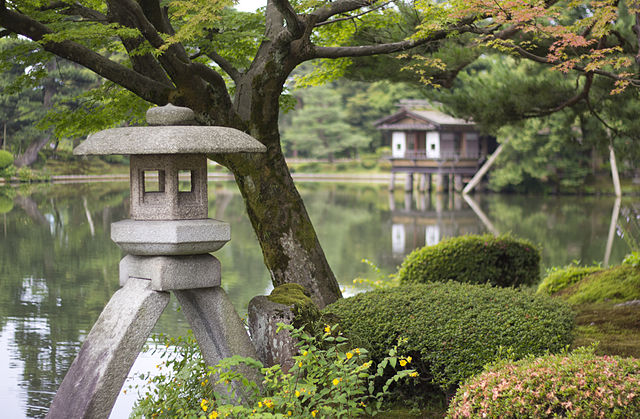
Kenrokuen Garden
Kenrokuen Garden, located in Kanazawa, Ishikawa Prefecture, Japan, is one of the country's three most famous traditional gardens, alongside Kairakuen in Mito and Korakuen in Okayama. Renowned for its breathtaking beauty, meticulous design, and historical significance, Kenrokuen has been a source of inspiration for poets, scholars, and garden enthusiasts for centuries.
History and Origin
Kenrokuen's roots trace back to the 17th century when it was developed by the ruling Maeda family over several generations. The garden was initially created as the outer garden of Kanazawa Castle and was expanded over time into the expansive landscape it is today. Its name, "Kenrokuen," translates to the "Garden of Six Attributes," symbolising the six traditional qualities of a perfect landscape: spaciousness, seclusion, artificiality, antiquity, abundant water, and broad views.
Design and Layout
The design of Kenrokuen embodies the concept of "borrowed scenery," where the surrounding natural landscape, including the distant mountains and the nearby Kanazawa Castle, is incorporated into the garden's layout. The garden covers approximately 11.4 hectares and is divided into multiple sections, each with its own unique features. Walking paths lead visitors through carefully crafted landscapes, seasonal flora, and strategically placed scenic viewpoints.
Seasonal Beauty
Kenrokuen is celebrated for its seasonal beauty, offering a different experience throughout the year. In spring, cherry blossoms adorn the garden, creating a breathtaking display of pink and white. Summer brings lush greenery and the sounds of flowing water from the numerous streams and fountains. Autumn transforms the landscape with vibrant hues of red, orange, and yellow as the maple trees change color. Even in winter, Kenrokuen's appeal endures, with snow-covered landscapes and the elegant silhouette of trees.
Key Features
- Kasumigaike Pond: The central pond, Kasumigaike, is a focal point surrounded by walking paths, teahouses, and iconic stone lanterns.
- Kotoji Toro Stone Lantern: Perhaps one of the most famous symbols of Kenrokuen, this lantern with its unique two-legged design is often depicted in photos of the garden.
- Yukitsuri: In winter, the garden employs a traditional technique known as "yukitsuri," where ropes are used to support and protect tree branches from heavy snow, creating a picturesque winter scene.
- Tea Houses: Throughout the garden, visitors can find traditional teahouses where they can experience the serene and contemplative atmosphere of a Japanese tea ceremony.
Recognition and Status
Kenrokuen Garden holds the distinction of being designated as a National Site of Special Scenic Beauty by the Japanese government. Its cultural and historical significance, combined with its outstanding beauty, has made it a must-visit destination for locals and tourists alike.
Kenrokuen Garden, with its timeless elegance and meticulous design, continues to enchant visitors, offering a glimpse into the artistry of Japanese garden design and a tranquil retreat from the hustle and bustle of modern life.