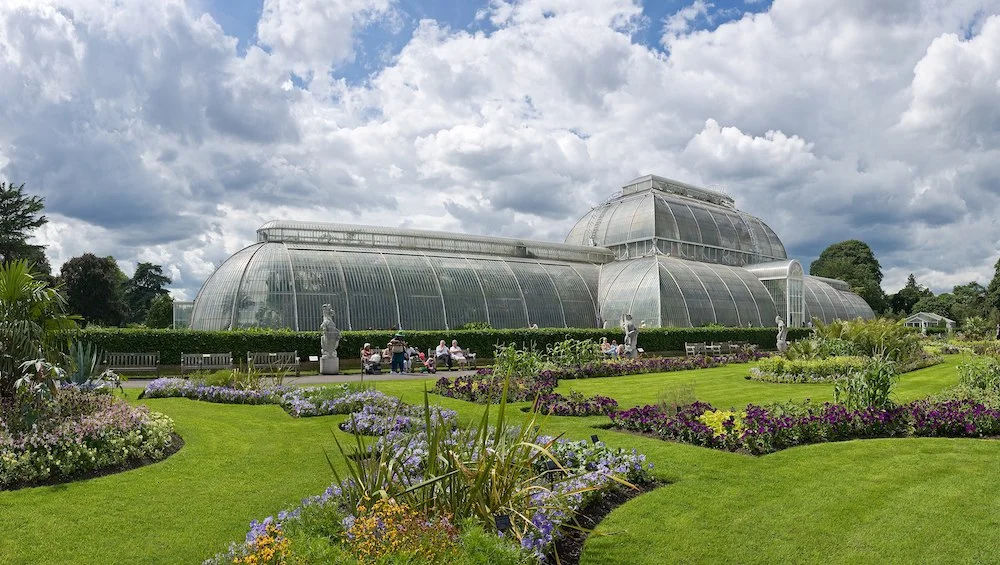
Royal Botanic Gardens, Kew
Kew Gardens, officially known as the Royal Botanic Gardens, Kew, is a UNESCO World Heritage site located in Richmond upon Thames, London, United Kingdom. It is one of the most famous and important botanical gardens in the world.
History:
Kew Gardens was established in 1759 and is now managed by the Royal Botanic Gardens, Kew, an organisation dedicated to plant science, conservation, and education. The gardens were initially created as a royal pleasure garden and later evolved into a centre for botanical research and plant conservation.
Gardens and Landscapes:
Kew Gardens covers an extensive area of 326 acres (132 hectares) and features a diverse range of landscapes and gardens. Some notable areas include the Palm House, Temperate House, Princess of Wales Conservatory, the Great Pagoda, the Waterlily House, the Japanese Gateway, and the Arboretum.
Plant Collections:
Kew Gardens is home to a vast collection of plants from all around the world. It houses over 50,000 living plants, including rare and endangered species. The gardens feature diverse plant collections, including trees, shrubs, orchids, carnivorous plants, ferns, alpine plants, and more.
The Palm House:
The Palm House is one of the most iconic structures in Kew Gardens. It is a large Victorian glasshouse that houses a range of tropical plants, including palm trees, ferns, and other exotic species. The Palm House is renowned for its impressive architectural design and the diversity of plant life within.
The Temperate House:
The Temperate House is another impressive glasshouse at Kew Gardens. It is the largest surviving Victorian glasshouse in the world and showcases a wide variety of temperate zone plants from different regions, including Australia, New Zealand, Asia, and South Africa.
Princess of Wales Conservatory:
This glasshouse is a modern structure and houses ten different climate zones, each with its own collection of plants. Visitors can explore displays of orchids, cacti, carnivorous plants, ferns, water lilies, and more.
The Great Pagoda:
The Great Pagoda is an ornate Chinese-style pagoda located within Kew Gardens. It was originally built in 1762 and was recently restored to its former glory. Visitors can climb to the top of the pagoda for panoramic views of the gardens and surrounding area.
Research and Conservation:
Kew Gardens is a global leader in botanical research, conservation, and plant identification. The organisation plays a crucial role in studying and preserving plant diversity, providing valuable scientific knowledge and expertise to support environmental conservation efforts worldwide.
Education and Events:
Kew Gardens offers a range of educational programs and events for all ages. These include guided tours, workshops, lectures, and interactive exhibits. The gardens also host seasonal events, such as the Orchid Festival and Christmas at Kew, which attract visitors from around the world.
Kew Gardens is not only a beautiful place to explore nature but also a hub for botanical research, conservation, and education. Its impressive collection of plants, diverse landscapes, and rich history make it a must-visit destination for plant enthusiasts, garden lovers, and anyone seeking to connect with the natural world.