
Future of Original Bramley Apple Tree in Jeopardy
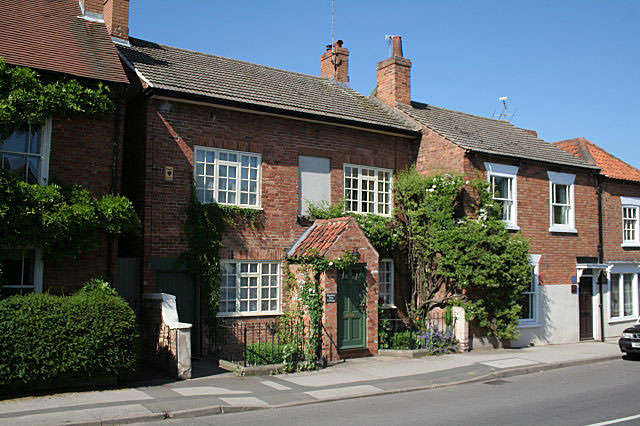
Image: Alan Murray-Rust / Bramley Tree Cottage / CC BY-SA 2.0
The original Bramley apple tree is “hanging in the balance” after the property outside which it grows was put up for sale.
Nottingham Trent University (NTU), which bought the Bramley Cottages on Church Street in Southwell, Nottinghamshire, in 2018, has now listed them on the market, raising fears for the future of the historic tree. Because it was never granted a Tree Preservation Order, despite efforts to secure one, any new owner could cut it down without penalty.
Often described as the “most famous tree in the world”, the Bramley apple’s story began around 1809, when Mary Anne Brailsford planted a pip in a cottage garden. Nearly half a century later, local gardener Henry Merryweather discovered its fruit while the garden belonged to Matthew Bramley, and was allowed to take cuttings on the condition the apples carried the Bramley name. Since then, the large green fruit has become a staple of British desserts and a favourite of chefs such as Delia Smith, who once said she “could not live in a country that could not supply me with Bramley apples”.
Though now suffering from incurable honey fungus, the aging “mother tree” continues to bear fruit and produced apples as recently as last year. Efforts are under way to save it. Celia Stevens, 85, Mr Merryweather’s granddaughter, hopes to raise £400,000 to buy the property and secure its future. “They fail to recognise what it has done over the years – it has helped feed troops, bring tourists over, and people just think it’s a cooking apple,” she said.
“We are very fortunate to have anything of this nature. My great-grandfather found this apple, bred it, and it became one of the most celebrated culinary apples ever produced.
“It has a value commercially, but it has a value as an ancient tree that brings value to Nottinghamshire, and it just needs the respect of people who understand and love such things to give it as long a life as it can have.”
Roger Merryweather, the gardener’s great-grandson, said he was “gravely concerned” about the tree, which has such a “rich history”.
The first recorded sale of a Bramley apple took place on 31 October 1862, when three apples were sold for two shillings. The tree also has royal connections: the late Prince Philip once thanked the Merryweather family for allowing Bramleys to be supplied to Sandringham. In 2022, it was among 70 ancient trees dedicated to Queen Elizabeth II during the Platinum Jubilee celebrations.
Campaigners warn that losing it would be a cultural blow. Dan Llywelyn-Hall, founder of the Mother Bramley Legacy Fund, said it would be “utterly tragic” if it were cut down. “We are talking about something on a much greater magnitude than the Sycamore Gap tree,” he told The Telegraph. “It’s the most famous tree in the world and in culinary terms, its apples are used in every kitchen up and down the country.
“It’s something we should be really proud of and show off at every opportunity. But its future is hanging in the balance.”
NTU, which has previously faced criticism for using the cottages as student accommodation and limiting public access to the tree, said it hopes any buyer will continue to care for it. “NTU is proud to have been the latest custodian of the Bramley apple tree and to have played a part in helping to safeguard and celebrate its legacy,” a spokesperson said, adding that the university aims to ensure it remains with a responsible owner and will offer guidance on its care.
Today, more than 300 growers across England produce roughly 83,000 tonnes of Bramley apples each year — all descended from a single tree whose fate now rests on who buys the cottage garden where it still stands.