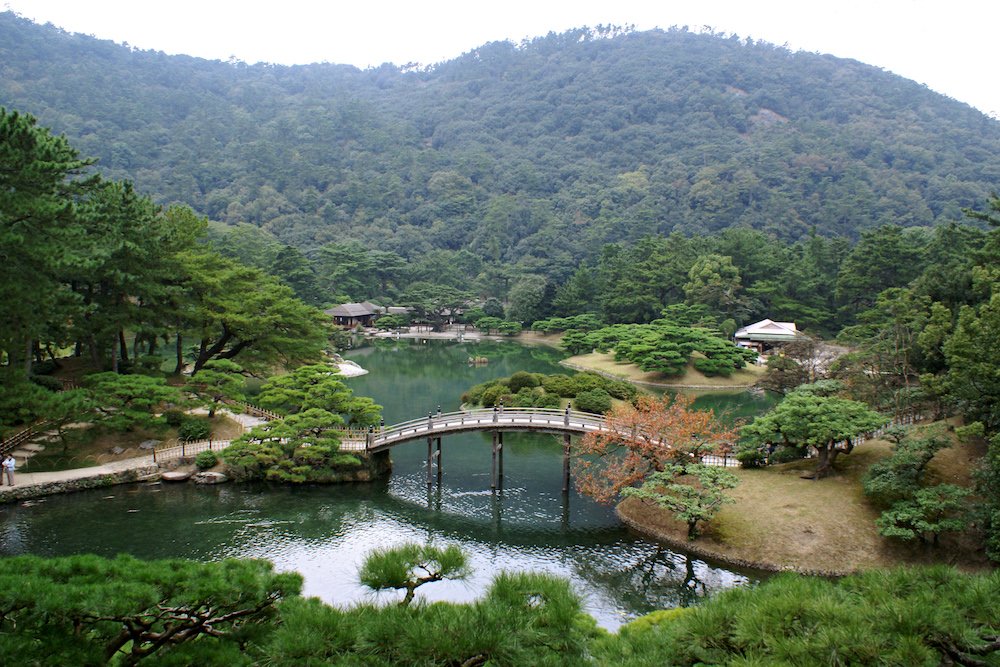
Ritsurin Garden
Ritsurin Garden, also known as Ritsurin Koen, is a celebrated historic landscape garden located in Takamatsu, Kagawa Prefecture, Japan. It is widely regarded as one of the finest examples of Edo-period daimyo strolling gardens and is designated as a Special Place of Scenic Beauty by the Japanese government.
History and Design
The garden’s origins date back to the late 16th century, when construction began under the local feudal lords of the Ikoma clan. It was later expanded and refined by the Matsudaira clan, rulers of the Takamatsu domain, who completed it in 1745. Designed as a strolling garden for feudal elites, its layout reflects classical Japanese aesthetics, emphasising harmony between natural scenery, carefully shaped landscapes, and borrowed views from the surrounding environment—especially Mount Shiun, which forms a dramatic backdrop.
Layout and Features
Ritsurin Garden covers roughly 75 hectares (about 187 acres), with approximately 16 hectares dedicated to the meticulously landscaped strolling garden. The grounds are divided into distinct sections featuring ponds, islands, hills, and pathways that guide visitors through changing scenic perspectives.
South Garden
The South Garden is the main and most elaborate section. It contains large ponds, arched bridges, ornamental pine trees, and traditional teahouses. This area is designed for leisurely walking, allowing visitors to experience shifting compositions of water, foliage, and architecture at every turn.
North Garden
The North Garden is more spacious and naturalistic in character. It includes open lawns, wooded areas, and additional ponds, presenting a quieter atmosphere that contrasts with the carefully composed scenery of the southern section.
Water Features
Water plays a central role in the garden’s design. Several interconnected ponds form the heart of the landscape, dotted with small islands and crossed by elegant bridges. These features create reflections of trees, hills, and pavilions, enhancing the sense of depth and tranquility.
Architecture and Teahouses
Scattered throughout the garden are traditional Japanese structures, including teahouses such as Kikugetsu-tei, which offers views across the main pond. These buildings serve both aesthetic and cultural purposes, providing spaces for tea ceremonies, rest, and appreciation of seasonal scenery.
Landscaping and Plant Collections
The garden is especially renowned for its expertly trained pine trees, many of which have been shaped for centuries to achieve distinctive silhouettes. Seasonal plants such as plum blossoms, cherry trees, irises, and maples ensure year-round visual interest. Careful pruning and arrangement of rocks, shrubs, and moss create scenes that resemble natural landscapes in miniature.
Cultural Significance
Ritsurin Garden is considered a masterpiece of Japanese landscape design and a symbol of feudal-era artistry. Its composition reflects principles of balance, asymmetry, and seasonal awareness central to Japanese aesthetics. Over the centuries, it has inspired artists, poets, and garden designers and remains a treasured cultural landmark.
Visitor Facilities
The garden offers well-maintained walking paths, rest areas, teahouses, and a small museum. Visitors can also enjoy boat rides on the main pond and seasonal cultural events that highlight traditional Japanese arts and festivals.
Ritsurin Garden stands as one of Japan’s most exquisite historic landscapes. Its carefully orchestrated scenery, elegant architecture, and tranquil atmosphere create an immersive experience that embodies the refined beauty and philosophical depth of classical Japanese garden design.