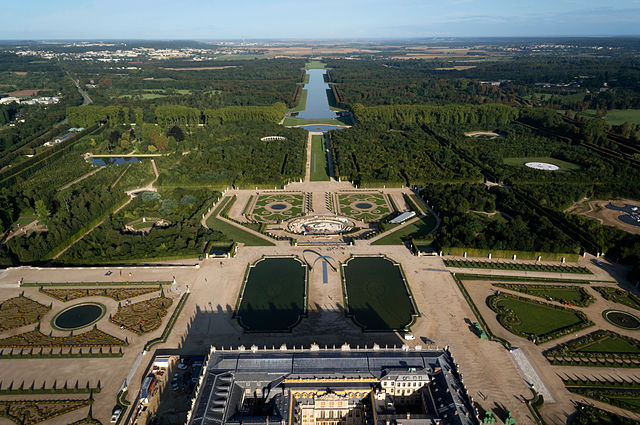
Gardens of Versailles
The Gardens of Versailles, also known as the Gardens of the Palace of Versailles (French: Jardins du Chateau de Versailles), are one of the most renowned examples of classical French garden design. These expansive gardens are an integral part of the Palace of Versailles, located in the Ile-de-France region of France, just outside Paris. The gardens were created to complement the opulence of the palace and serve as a grand outdoor space for leisure and entertainment.
Design and Layout
The Gardens of Versailles were designed by landscape architect Andre Le Notre, commissioned by Louis XIV in the 17th century. The design follows the principles of symmetry, axial perspectives, and formal geometry characteristic of French Baroque garden design.Scale and Size
Covering an enormous area of about 800 hectares (approximately 1,976 acres), the Gardens of Versailles are among the largest gardens in the world. The sheer scale of the gardens is breathtaking, with carefully manicured lawns, flowerbeds, and water features.Ornamental Lakes and Water Features
The gardens boast numerous ornamental lakes, ponds, and fountains. The Grand Canal, a massive water feature stretching over 1,600 meters, serves as a focal point for various activities such as boating.Fountains and Sculptures
Adorning the gardens are a multitude of fountains, many of which are adorned with sculptures and mythological figures. The Apollo Fountain and the Latona Fountain are among the most famous.Orangerie and Parterre du Midi
The Orangerie, a large greenhouse, was constructed to protect delicate orange trees during winter. The Parterre du Midi is a meticulously arranged flowerbed in the southern part of the gardens.Versailles Orangery Museum
The Orangerie also houses the Versailles Orangery Museum, which displays sculptures and artwork from the Palace of Versailles.Palace View and Perspective
The design of the gardens is carefully aligned with the architecture of the palace, creating breathtaking vistas and perspectives. The central axis of the gardens extends from the palace to the horizon.Events and Entertainment
The gardens were designed to host various events and entertainment for the court, including concerts, outdoor balls, and fireworks displays.
Contemporary Additions
Over the years, some contemporary additions have been made to the gardens, including modern sculptures and temporary art installations.
Versailles Orangery Museum
The Orangerie also houses the Versailles Orangery Museum, which displays sculptures and artwork from the Palace of Versailles.
Contemporary Additions
Over the years, some contemporary additions have been made to the gardens, including modern sculptures and temporary art installations.
The Gardens of Versailles, a UNESCO World Heritage site since 1979, continue to attract millions of visitors each year who come to admire the splendour and artistic brilliance of this iconic French garden.