
Peter's Persica
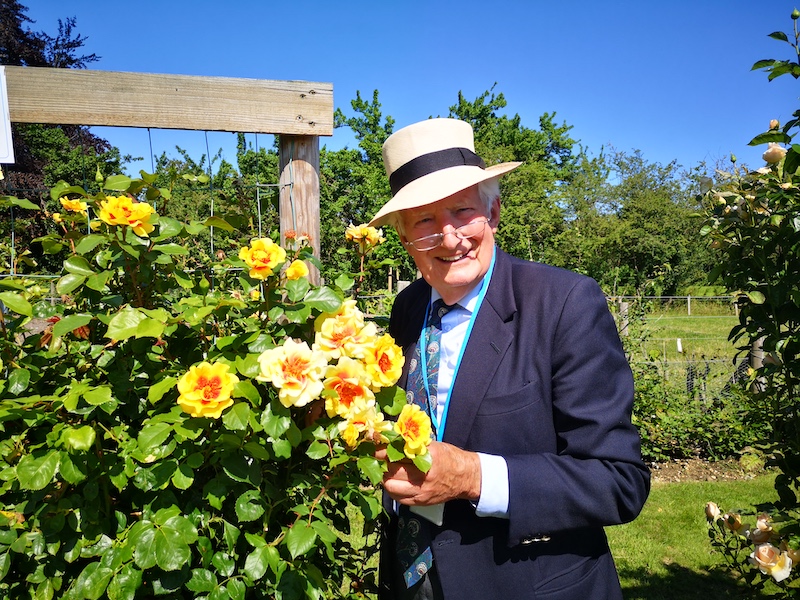
Image: Arthur Edwards
Our esteemed colleague, Peter Seabrook, had an innate passion for discovering new and remarkable plants, which he fondly referred to as his "novelties." During the summer of 2021, Peter encountered a captivating rose at an international rose trial judging event, bred by the renowned Chris Warner.
Among the small number of climbing Persica roses, this particular variety stood out. Its semi-double flowers boast vibrant yellow petals with a captivating burnt-orange "eye" at their centre, a distinctive characteristic of the Persica types.
With a delicate fragrance, this rose is classified as a short climber, rendering it an excellent choice for various garden types and even containers. In honour of Peter, who sadly passed away in January 2022, this exceptional rose was named 'Peter's Persica.' Last week, it was bestowed with a prestigious accolade at the Gardeners World Live show in Birmingham, receiving the Peter Seabrook Award for Best New Plant.
This autumn, 'Peter's Persica' will be available as a bare-root plant, adding to the National Collection of over 40 Persica roses. This remarkable collection is lovingly curated by Daniel Myhill, a dedicated rose enthusiast based in Norfolk (who also captured the photograph of Peter alongside the rose). The growing popularity of Persica roses stems not only from their captivating and colourful blooms but also their significant appeal to bees and other vital pollinators.