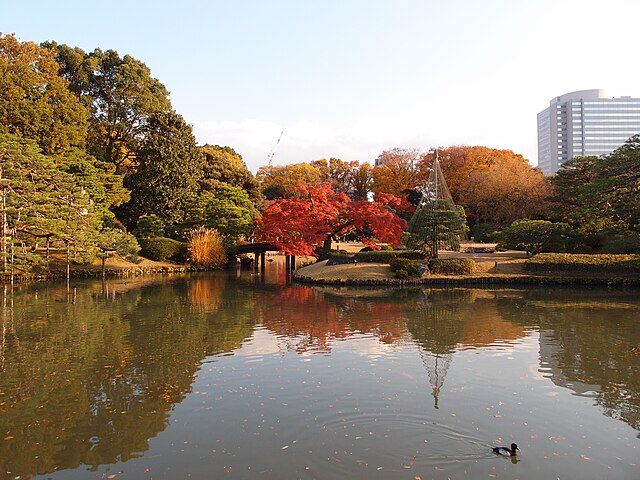
Rikugien Gardens
Rikugien Gardens, also known as Rikugi-en, is a renowned traditional Japanese landscape garden located in Tokyo, Japan. It is considered one of the finest surviving examples of Edo-period strolling gardens and is celebrated for its poetic design inspired by classical Japanese literature.
History and Design
Rikugien was constructed between 1695 and 1702 during the Edo period under the direction of Yanagisawa Yoshiyasu, a trusted samurai and statesman serving the Tokugawa shogunate. The garden’s name translates to “Garden of the Six Principles of Poetry,” referencing six classical elements of waka poetry. Its design reflects this literary inspiration, with landscapes intended to evoke scenes from famous poems and traditional Japanese verse.
Layout and Features
The garden spans approximately 7 hectares (17 acres) and is designed as a circular strolling garden centred around a large pond. Winding paths guide visitors through carefully composed scenery, revealing new viewpoints and symbolic landscapes at every turn.
Central Pond Area
At the heart of the garden lies a broad pond featuring small islands and stone bridges. These elements are arranged to create harmonious compositions when viewed from different angles, embodying the principle of “moving scenery” central to Japanese garden design.
Hills and Scenic Vistas
Artificial hills and elevated paths provide panoramic views across the garden. From these vantage points, visitors can appreciate layered scenery combining water, trees, rocks, and distant structures. The placement of each feature is intentional, forming living landscapes reminiscent of painted scrolls.
Seasonal Beauty
Rikugien is especially famous for its seasonal transformations. In spring, cherry blossoms—including a magnificent weeping cherry tree near the entrance—draw large crowds. Autumn brings vibrant displays of red and gold maple foliage, while winter highlights the sculptural beauty of bare branches and carefully pruned pines.
Architecture and Pavilions
Traditional structures are subtly integrated throughout the grounds, including teahouses and resting pavilions. These buildings offer quiet spaces for contemplation and frame scenic views, reinforcing the garden’s atmosphere of calm reflection and refined elegance.
Landscaping and Plant Collections
The garden’s plantings are meticulously maintained to preserve its historical character. Carefully shaped pine trees, bamboo groves, flowering shrubs, and seasonal blossoms are arranged to create a balance between natural appearance and artistic intention. Stones and gravel are positioned with equal care, contributing to the overall visual harmony.
Cultural Significance
Rikugien is designated as a Special Place of Scenic Beauty in Japan, recognising its outstanding cultural and historical value. It represents the sophistication of Edo-period landscape design and reflects the deep connection between poetry, nature, and aesthetics in Japanese culture.
Visitor Facilities
The garden provides well-kept walking paths, benches, and teahouses for visitors. Seasonal evening illuminations, particularly during cherry blossom and autumn foliage seasons, offer a unique opportunity to experience the garden in a magical nighttime setting.
Rikugien Gardens stands as a masterpiece of classical Japanese landscape artistry. Through its poetic inspiration, refined composition, and tranquil ambiance, it offers visitors an immersive journey into the elegance and symbolism of traditional Japanese garden design.