
Alpines: No Space? No problem!

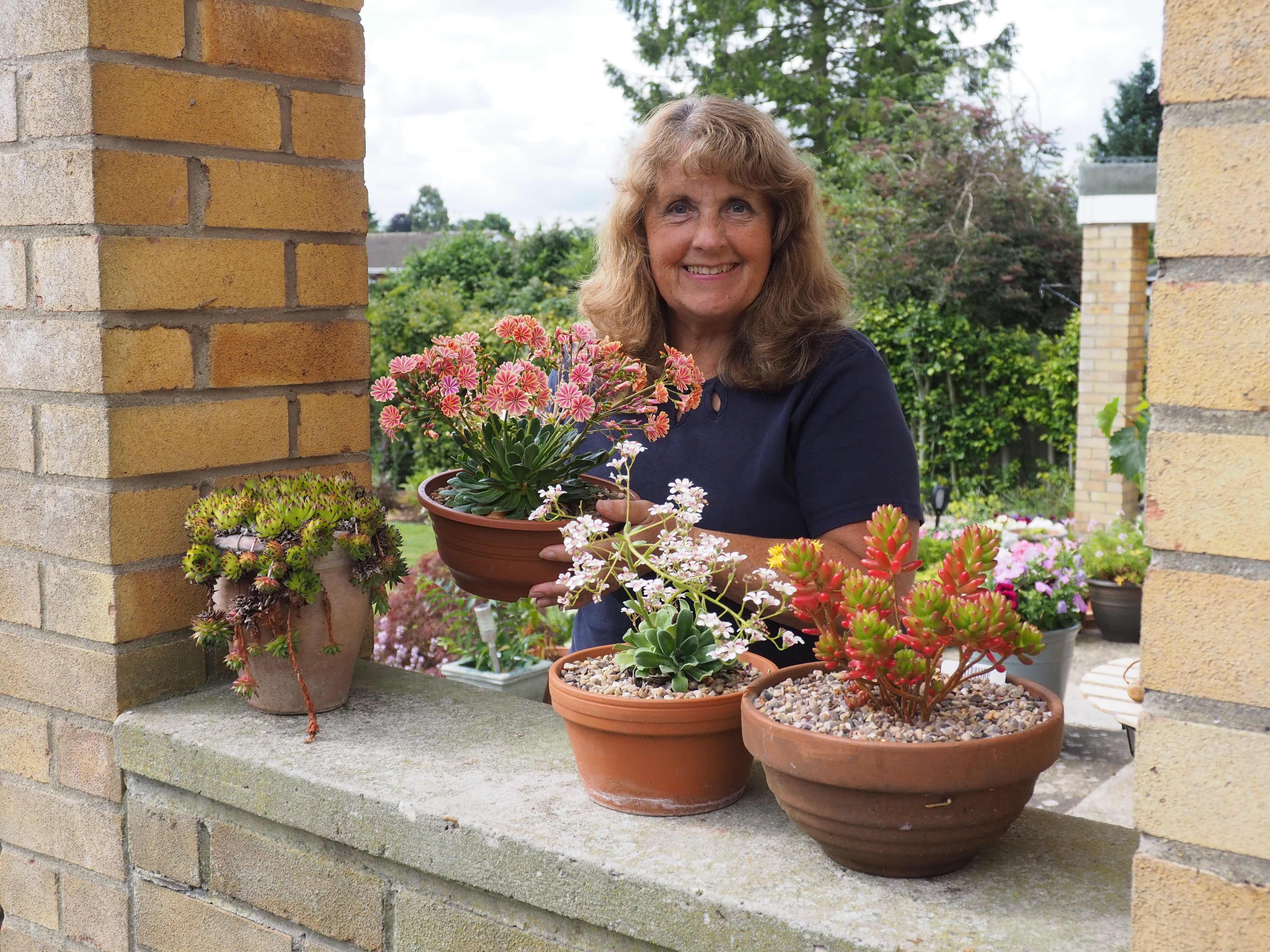
Image: Val Bradley
Having a reduced growing space might make you feel that your plant choices are limited, but there’s a world of options if you think small and there’s a really useful group of plants sold under the heading of “Alpines”. These can vary considerably in size from really tiny to moderately small, so you need to check whether what you’re buying is suitable. With these little gems, it’s very easy to get carried away. Taken literally, the name Alpine should apply only to plants that originate in mountainous areas, such as the Alps, but it has come to include a lot of small and low-growing plants that are ideal for pots in a restricted space. They do get bigger and you will need to repot them, just as you would any other plant, just not as often.
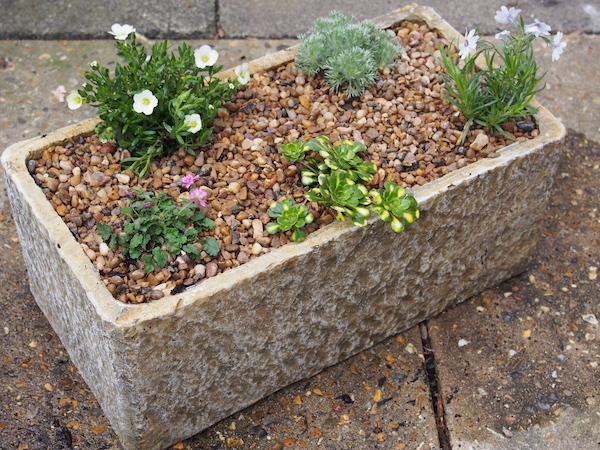
Many of these plants are pretty tolerant and will grow in similar conditions to those where they come from: windy, cold in winter, hot in summer. The difference is that mountain areas are very well drained and the one thing these plants will not take is being wet. They will rot. When you pot them, use a good soil-based compost and add extra grit (mixed into the compost and also as a layer in the bottom of the pot itself). Use more grit as a mulch around the plants over the surface of the soil. This helps keep weeds away and also (more importantly) keeps the “collar” of the plant, where the top meets the roots, dry and saves it starting to suffer if the soil is wet.
You can group plants together in a larger pot to make an alpine garden, but keep it in context with the plants you want to grow and use a shallow pot to maintain the good drainage. Such a garden will develop over the years and you may lose some of the original plants, but others will survive and spread. My original pot held 8 Plants, but about half have died out over the years. Now it is filled with a very small Clematis marmoraria, Primula auricula, Iris pumila and a Saxifraga to give interest over several months. There is also a wild orchid in there, which must have arrived with one of the other plants. It is rather out of context with the others in terms of size, but is so pretty it deserves to stay (and I’m rather pleased to have it!).
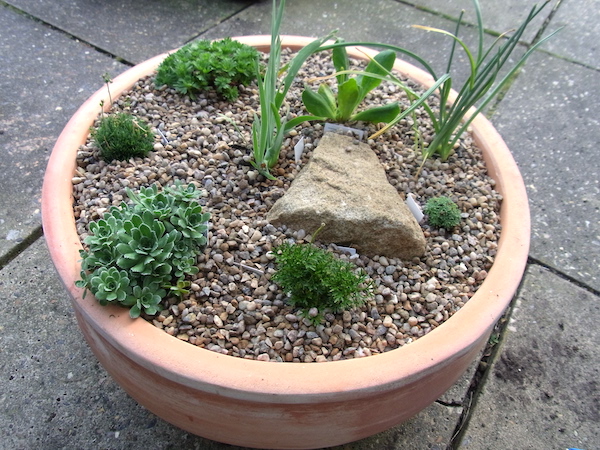
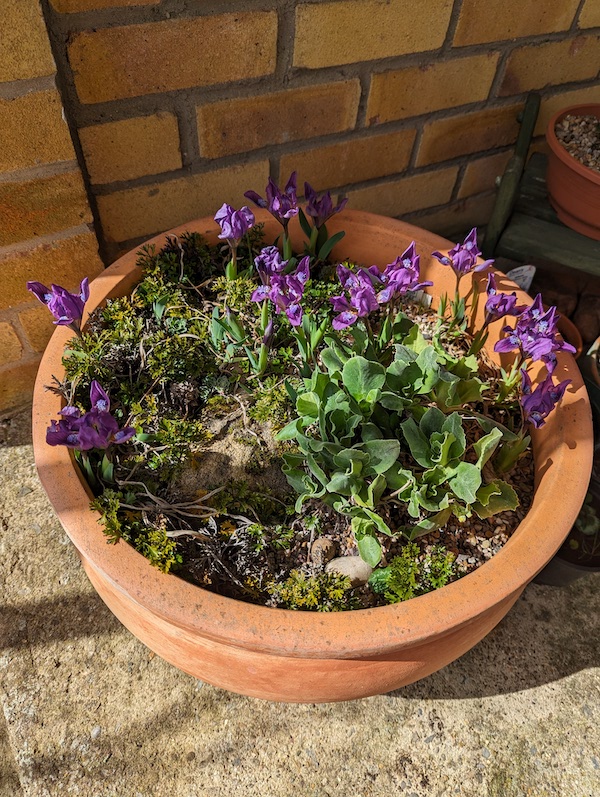
(Above: How it started and how it looks now)
You can play with ideas for the plants and add rocks, decorative stones or ornaments as you wish. Succulents like Sempervivum are a good choice for planting together and root very easily into small pots for use elsewhere. Just like a larger garden, you can blend plants together for the best effect. Many alpines flower profusely and by timing your selection, you can have flowers throughout the spring and summer.
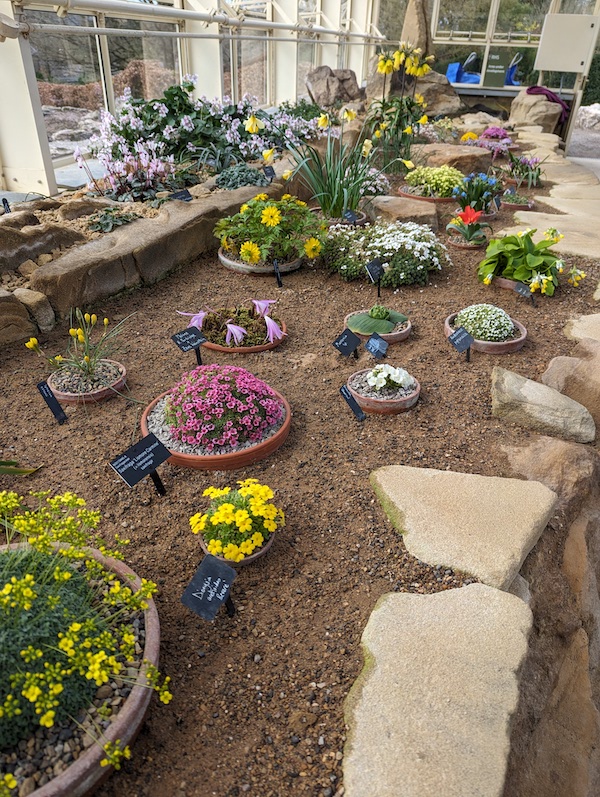
If you need plant inspiration or ideas for planting, visit a garden that has a rock garden or alpine house, such as the RHS gardens at Wisley in Surrey and Harlow Carr in North Yorkshire. There are alpine shows around the country and, if you are keen, you can join the Alpine Garden Society